
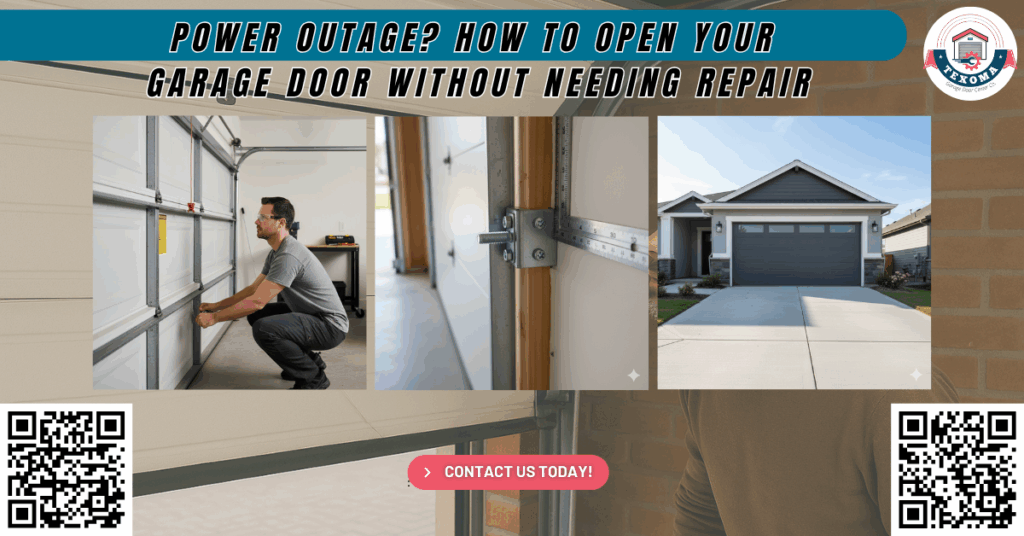
When a power outage strikes without warning, it can disrupt your entire routine. You may find yourself stuck at home, unable to get your car out, or returning from work to a door that won’t budge. For many homeowners in Sherman, TX, the garage door is the main entry point to the house, which makes losing power even more inconvenient.
At Texoma Garage Door Center Co., our technicians have seen this happen time and again. One memorable case involved a resident who called us during a summer storm that knocked out electricity across the city. She needed to leave for an appointment, but her garage door wouldn’t move. Instead of panicking, she contacted us for guidance. Within minutes, we helped her manually release the opener and safely lift the door without any damage. She later told us how relieved she was to learn the correct procedure—something that saved her from an unnecessary garage door repair bill.
According to data from the U.S. Department of Energy, millions of American households experience at least one significant outage each year. While it might only last a few hours, a sudden loss of power can leave you stranded if you rely solely on your electric opener. Knowing how to open your garage door manually is a valuable skill that every homeowner should have.
This guide from Texoma Garage Door Center Co. explains how to handle the situation safely, step by step. We’ll also share tips on preventing damage, maintaining your system, and preparing for future outages. By the end, you’ll feel confident about managing your garage door even when the lights go out.
Understanding the Role of Your Garage Door Opener
A modern garage door opener is an impressive piece of technology designed to make your life easier. It uses a motorized system powered by electricity to lift and lower your garage door smoothly. This operation depends on several essential parts working together—springs, cables, rollers, and tracks—all fine-tuned to balance the door’s weight.
When the power goes out, the electric motor stops functioning. However, the physical components of the door—like the torsion or extension springs—still store energy that can be used to lift the door manually. To access that functionality, you’ll need to use the emergency release mechanism, typically a red cord hanging from your opener rail.
The purpose of this cord is to disconnect the door from the motorized carriage, allowing you to lift or lower it manually. Every homeowner should know where this cord is located and how it operates. If you’re unfamiliar with your system, take a moment today to locate it while the power is on, so you’re prepared when an outage occurs.
Step-by-Step: How to Open Your Garage Door Manually During a Power Outage
Even though the process is simple, each step must be done with care to prevent accidents or damage. Here’s how to safely open your garage door when there’s no power:
Step 1: Ensure the Door is Fully Closed
Before touching the emergency release cord, make sure your garage door is completely closed. If it’s halfway up, it can drop suddenly when disconnected from the opener. This not only poses a safety hazard but can also damage the door panels or tracks.
If the door is stuck open, do not attempt to close it manually. In such cases, contact Texoma Garage Door Center Co. for professional assistance.
Step 2: Find the Emergency Release Cord
The emergency release handle is usually a red cord hanging down from the rail near the garage door opener. It’s designed to be easy to locate, even in low light. If your garage is dark, use a flashlight to identify it.
Step 3: Pull the Cord Down Firmly
Grasp the red handle and pull it straight down with a steady motion. You’ll hear or feel a “click” as the trolley releases from the opener carriage. This action disconnects the motor, allowing the door to operate freely.
Step 4: Lift the Door Manually
Stand inside the garage, grip the bottom handle with both hands, and lift the door slowly. If everything is in good condition, the door should move smoothly without much resistance. If it feels unusually heavy or won’t budge, stop immediately—this could mean a broken spring or cable.
Step 5: Keep the Door Securely Open
Once the door is open, make sure it stays in place. You can use locking pliers or a C-clamp just below the bottom roller on each track to prevent the door from accidentally closing.
Step 6: Reconnect the Opener When Power Returns
After electricity is restored, pull the release cord toward the door until it clicks back into place. Then use your wall switch or remote control to operate the opener. The trolley will automatically reconnect, and your system should function normally again.
Why Manual Operation Matters for Every Homeowner
Learning how to manually open your garage door isn’t just about convenience—it’s about safety and preparedness. Power outages can happen anytime, often during storms or extreme weather events common in North Texas. By knowing how to use your door without electricity, you can avoid being trapped or damaging your equipment through improper handling.
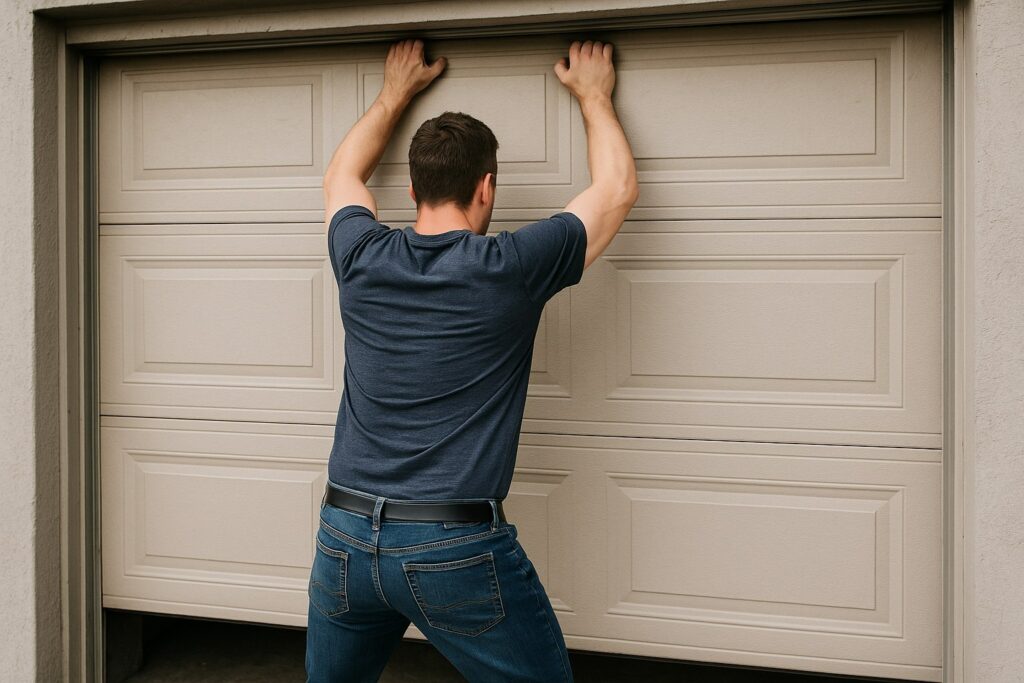
Manual operation is also a vital part of preventive care. It gives you a chance to notice how your door feels and moves, helping you spot early signs of wear such as stiffness, grinding noises, or uneven lifting. Addressing these problems promptly can prevent costly garage door repair needs later.
Safety First: Precautions When Opening Your Door Manually
Even though the steps seem straightforward, garage doors are heavy—often weighing over 150 pounds—and are kept in balance by high-tension springs. Mishandling them can result in serious injury.
Here are a few critical safety tips to keep in mind:
- Never pull the release cord when the door is open or partially open. Doing so could cause it to fall suddenly.
- Keep hands and feet clear of moving parts. Avoid touching the springs, cables, or tracks while lifting the door.
- Do not force the door. If it doesn’t lift easily, stop. Forcing it could break a spring or bend the track.
- Use a flashlight during power outages. Good visibility helps prevent accidental injury.
- Keep children and pets away. Manual operation should only be performed by adults who can handle the door safely.
What If Your Door Still Won’t Open?
Sometimes, even after pulling the emergency release, the door refuses to move. This usually signals a deeper issue with one of the system’s mechanical components.
Here are some common causes:
Broken Springs
Torsion or extension springs counterbalance the weight of the door. If one breaks, the door may become too heavy to lift. You might notice a loud snapping sound when it happens.
Frayed or Snapped Cables
Cables are responsible for transferring the spring tension to the door. When they fray or break, the door can become jammed or lift unevenly.
Rollers Off Track
A roller that pops out of the track can prevent the door from moving smoothly. Forcing it can cause further misalignment.
Locked Door Mechanism
Some garage doors have a manual lock that may engage during a power outage. Check for a lock handle or slide bolt on the outside before assuming something’s broken.
If any of these problems occur, do not attempt to repair them yourself. Garage door systems operate under high tension and can be dangerous without proper training. Contact Texoma Garage Door Center Co. immediately for professional inspection and repair service.
How Regular Maintenance Prevents Future Problems
Preventive garage door maintenance is the key to ensuring your door performs well during both normal operation and emergencies. Neglecting small maintenance tasks can lead to big problems when you least expect them—like during a blackout.
Here’s what regular upkeep involves:
1. Lubricate Moving Components
Apply a silicone-based lubricant to rollers, hinges, and tracks every few months. This minimizes friction and ensures smooth manual operation. Avoid using thick grease, which can attract dirt and debris.
2. Check the Door Balance
Disconnect the opener and lift the door halfway. If it stays in place, your springs are balanced. If it slides down or shoots up, they may need adjustment by a professional.
3. Inspect Springs and Cables
Look for any signs of rust, gaps, or fraying. These are indicators that the parts are wearing out. A spring failure can make your door unsafe to operate.
4. Clean the Tracks
Dust and debris can cause grinding or sticking. Use a damp cloth to clean both sides of the track, and remove any buildup near the rollers.
5. Test the Manual Release
Once or twice a year, test the emergency release cord while the door is closed to ensure it disengages properly.
By investing a little time in maintenance, you can save yourself the frustration of being locked in or paying for emergency garage door repair later.
The Advantages of a Battery Backup Opener
If you frequently experience power outages, consider upgrading to a battery backup garage door opener. This system includes a small rechargeable battery that provides enough power for several opening and closing cycles even when the main electricity is out.
Battery backup systems are particularly valuable for families who rely on their garages for daily access or for elderly homeowners who may struggle with manual lifting. They are also a smart choice for commercial properties that require reliable access for vehicles and deliveries.
At Texoma Garage Door Center Co., we install and service several leading opener brands that feature backup systems, such as LiftMaster, Genie, and Chamberlain. Our team can recommend the best model for your needs and handle the entire installation process.
How Businesses Can Prepare for Power Outages
For commercial clients in Sherman and surrounding areas, a power outage can disrupt operations and cost valuable time. Delivery trucks, maintenance crews, or emergency service vehicles may be unable to access the property if the doors won’t open.
To prevent downtime, business owners should:
- Train employees on how to use the manual release safely.
- Schedule quarterly maintenance to keep all components in optimal condition.
- Install heavy-duty springs and cables designed for frequent use.
- Consider an automatic battery backup system for critical access points.
- Keep Texoma Garage Door Center Co. on speed dial for emergency repairs and inspections.
By taking these steps, you can maintain operations and ensure your property remains secure even when the power grid fails.
Troubleshooting Common Garage Door Issues After Power Restoration
Once the power returns, you might notice that your garage door doesn’t immediately respond. This could happen for several reasons, and most are easy to fix.
- Opener not reconnected: Pull the release cord toward the door to reattach the trolley, then activate the opener.
- Tripped circuit breaker: Check your home’s electrical panel and reset the breaker if necessary.
- Misaligned safety sensors: Ensure the small LED lights at the bottom of the door frame are glowing steadily. If they’re blinking, realign them until they stop.
- Remote control reset: Some openers lose programming after power surges. Consult your owner’s manual to reprogram your remote.
If these steps don’t restore normal operation, schedule a visit from our professional technicians.
Professional Garage Door Repair vs. DIY: Knowing When to Call Experts
While basic maintenance like lubrication and cleaning can be done safely at home, complex repairs should always be left to professionals. Springs and cables operate under tremendous tension, and attempting to replace them without training can cause injury.
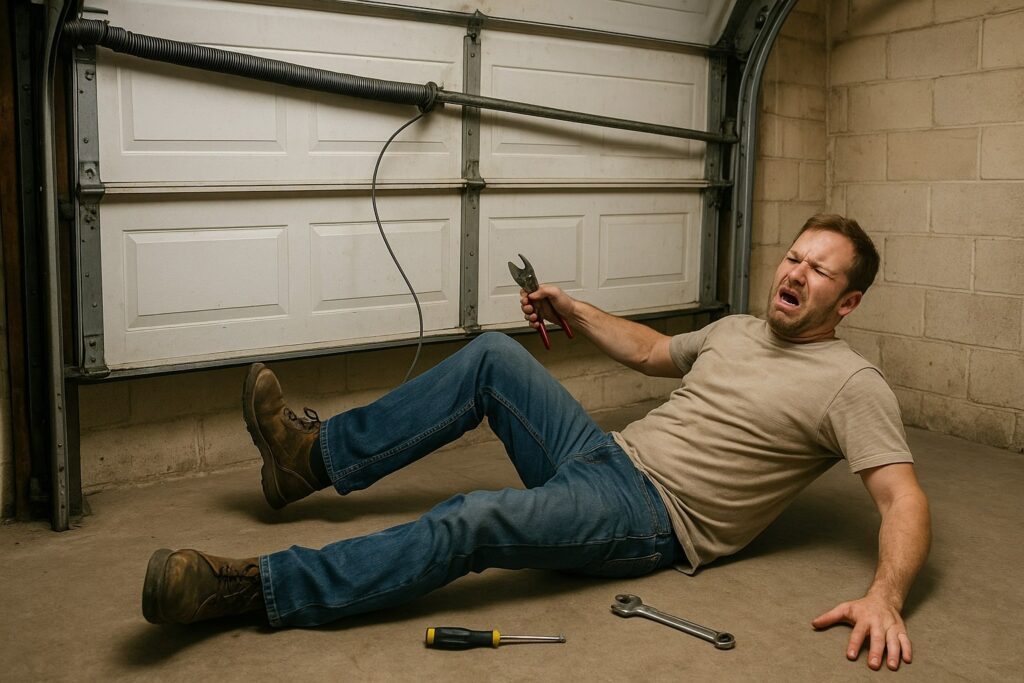
At Texoma Garage Door Center Co., our certified technicians bring years of experience handling all types of garage doors—residential, commercial, and custom installations. We use precision tools, genuine replacement parts, and proven techniques to ensure every job is done right the first time.
When you contact us, we perform a thorough inspection to identify the root cause of the issue. From broken springs to faulty openers, we’ll explain your options clearly and provide upfront pricing.
Emergency Preparedness: Creating a Garage Door Safety Plan
Every household should have a plan in place for emergencies, including power outages. Here’s how to prepare your family:
- Teach every adult how to operate the manual release. Practice during daylight hours so everyone knows the process.
- Store essential tools nearby. Keep a flashlight and locking pliers within reach of the door.
- Label the emergency release cord clearly. Use reflective tape for visibility.
- Keep access points clear. Avoid stacking boxes or equipment near the tracks or the release handle.
- Check door balance regularly. If it’s difficult to lift manually, call for service before an emergency arises.
Being prepared helps ensure your safety and peace of mind when unexpected outages occur.
Frequently Asked Questions (FAQs)
1. Can I install a manual release system on an older garage door that doesn’t have one?
Yes, most older garage doors can be retrofitted with a manual release system. A professional technician can install one safely and ensure it works correctly with your existing opener setup.
2. Is it safe to leave my garage door open during a long power outage?
It’s not recommended to leave your garage door open for extended periods. Doing so can invite pests, debris, or unwanted entry. If you must keep it open, secure it with clamps and monitor it regularly.
3. How long does a battery backup garage door opener typically last during an outage?
Most battery backup systems provide enough power for 20 to 50 open-and-close cycles, depending on the brand and model. Regularly testing and replacing the battery every 2-3 years ensures optimal performance.
4. Can frequent power outages damage my garage door opener?
Yes, repeated outages and power surges can wear down the opener’s circuit board and motor over time. Installing a surge protector or a backup battery system can help safeguard your garage door equipment.
How Can Texoma Garage Door Center Co. Help You?
When your garage door stops working during a power outage or at any other time, Texoma Garage Door Center Co. is ready to help. Our experienced team specializes in garage door repair, installation, and maintenance services throughout Sherman, TX, and neighboring areas.
We handle every type of garage door problem, including:
- Broken or stretched springs
- Malfunctioning openers
- Frayed or snapped cables
- Misaligned tracks and rollers
- Damaged panels or weather seals
- Preventive inspections and tune-ups
With our fast response times, skilled technicians, and commitment to quality service, we ensure your garage system is restored quickly and safely.
📍 Address: 1733 Texoma Pkwy, Sherman, TX 75090, United States
📞 Phone: (430) 255-5451
Whether you need emergency service or routine maintenance, contact us today to schedule an appointment. Our team is available to answer your questions, inspect your system, and provide expert advice tailored to your specific needs.
Final Thoughts
A power outage can happen anytime, but it doesn’t have to bring your day to a halt. By learning how to manually open your garage door and performing regular maintenance, you can stay prepared and avoid unnecessary stress or repairs.
Understanding how your garage system works is key to keeping it safe and reliable. With professional support from Texoma Garage Door Center Co., you can be confident that your door will operate smoothly—no matter what the weather or power situation brings.
From quick fixes to complete system overhauls, our mission is simple: to keep every garage door in Sherman working efficiently, safely, and dependably. When in doubt, don’t force it. Contact Texoma Garage Door Center Co. for professional help today.
- Power Outage? How to Open Your Garage Door Without Needing Repair
- Sherman, TX Automatic Garage Doors: Features and Maintenance
- Sherman, TX Garage Door Maintenance: Affordable, Professional Garage Door Service
- Sherman, TX Garage Door Tune-Up: What Homeowners Should Know
- Garage Door Types in Sherman, TX: Local Favorites and Their Advantages