Every single day, you rely on your garage door to work perfectly. You press the button on your remote control, the motor hums, and the heavy door lifts up smoothly to let your car in or out. It is something most homeowners in Sherman, Texas take completely for granted—until the exact moment it stops working.
Imagine you are already running late for an important morning meeting at your job downtown, or you need to drop the kids off at school. You walk out to the garage, press the wall button, and nothing happens. Or worse, you hear a loud, terrifying BANG that sounds like a gunshot echoing through your home. Your garage door is stuck, your car is trapped inside, and your entire day is instantly ruined.
When a garage door breaks down unexpectedly, it is not just an annoying inconvenience. It is a major safety hazard and a sudden home security threat. A broken garage door leaves your home vulnerable to the changing North Texas weather and to unwanted intruders.
Fortunately, most sudden garage door emergencies can be prevented entirely. By understanding how your garage door system works and committing to routine preventative maintenance, you can save thousands of dollars, avoid stressful breakdowns, and keep your family safe.
As a garage door technician with 15 years of hands-on experience in the Texoma region, I have seen every type of failure imaginable. In this comprehensive guide, we will dive deep into the mechanics of your door, explore the unique environmental factors that affect homes in Sherman, TX, and explain why routine care from Texoma Garage Door Center Co. is the smartest investment you can make for your home.
Understanding Your Garage Door System: More Than Just a Piece of Wood or Metal
To understand why maintenance is so vital, you first need to realize that your garage door is not just a simple barrier. It is actually the largest, heaviest moving mechanical object in your entire home. It consists of dozens of moving parts, interconnected systems, and high-tension components working together under immense physical stress.
If even one minor component fails, it can create a dangerous domino effect that destroys the entire system. Let's break down the primary components that require regular attention.
The Muscle: Torsion Springs vs. Extension Springs
Many homeowners assume that the garage door opener does all the heavy lifting. This is a common myth! The garage door opener is simply the brains of the operation that guides the door up and down. The real muscle behind the lifting power comes from the garage door springs.
- Torsion Springs: These are heavy, tightly wound springs mounted on a metal shaft directly above the garage door opening. When the door closes, cables attached to the bottom corners wind up the springs, storing massive amounts of mechanical energy. When the door opens, that energy unwinds to lift the weight.
- Extension Springs: Commonly found on older doors or lighter single-car doors, these springs run horizontally along the overhead tracks on both sides of the door. They stretch out to store energy when the door closes and contract to help lift it.
Because these springs handle doors that frequently weigh between 150 to over 400 pounds, they are under extreme tension. Over time, metal fatigue sets in, causing the steel to weaken and eventually snap.
The Track and Roller Assembly
Think of the tracks as the railroad lines for your garage door. The rollers are the wheels that travel inside these tracks.
- Rollers: These can be made of plastic, steel, or nylon. Steel rollers with ball bearings offer smooth operation but require regular lubrication. Nylon rollers are much quieter and last longer but can still wear out or crack over time.
- Tracks: These metal channels must remain perfectly aligned and free of dents or debris. If a track becomes bent or misaligned, the rollers can bind up, causing the door to jam or completely come off the tracks.
Cables, Drums, and Hinges
- Cables: Heavy-duty aircraft cables connect the bottom fixtures of the door to the drums at the top of the spring shaft. They carry the lifting force from the springs. If these cables become frayed, rust-damaged, or loose, they can snap, causing the door to crash down with terrifying force.
- Drums: These are grooved metal wheels at the ends of the torsion shaft that neatly wind up the cables.
- Hinges: These hold the individual horizontal sections of your door together, allowing the door to flex and curve as it transitions from moving vertically to horizontally along the ceiling.
The Hidden Costs of Neglecting Your Garage Door
Skipping regular maintenance might seem like a way to save a few dollars in the short term, but it almost always leads to significantly higher costs down the road. When you ignore minor warning signs, you subject your system to unnecessary wear and tear.
1. Emergency Repair Fees
Garage doors never seem to break down at a convenient time. They fail early in the morning, late at night, or over the weekend. When you need an urgent, same-day Garage Door Repair to get your vehicle out of the garage, emergency service calls can carry premium rates. Regular maintenance ensures you address weak components during normal business hours before they cause a crisis.
2. Collateral Component Damage
When one part of your garage door system is forced to work harder to compensate for a failing component, it rapidly wears out other parts. For example, if your torsion springs lose their tension and become weak, the garage door becomes incredibly heavy.
Your garage door opener motor will now have to exert massive effort to pull the heavy door up. This extra strain can quickly burn out the opener’s internal gear kits, fry the circuit board, or snap the drive chain. What could have been a simple, low-cost spring adjustment suddenly turns into a total opener replacement costing hundreds of extra dollars.
3. Safety and Liability Issues
A malfunctioning garage door is a severe safety hazard. According to safety data, thousands of injuries occur every year across the United States due to garage door accidents.
- A snapping spring can throw sharp metal shrapnel across the garage.
- A snapped cable can cause a heavy steel door to drop instantly like a guillotine, crushing anything—or anyone—beneath it.
- Malfunctioning safety sensors can fail to detect a child or pet walking under a closing door.
Regular safety inspections check all automatic reverse systems, ensuring your home remains a safe environment for your family, guests, and pets.
How Sherman’s Weather and Climate Accelerate Wear and Tear
Homeowners living in Sherman, Texas, and the greater Texoma area face unique environmental challenges that can accelerate the degradation of garage door components. Our local weather shifts dramatically throughout the year, putting unique stresses on mechanical systems.
Season | Climate Factor | Direct Impact on Garage Door |
Summer | Intense heat & high humidity | Dries out vital lubricants, causes metal expansion, warps wooden elements |
Fall/Winter | Drastic temperature drops | Causes metal components to contract, making springs brittle and prone to snapping |
Spring | Severe storms & heavy wind | Creates massive pressure differentials, puts extreme structural strain on tracks and panels |
Extreme Summer Heat and Humidity
Sherman summers are notoriously hot and humid. This intense heat baking your garage can cause metal components to expand. If your tracks are already slightly misaligned, this thermal expansion can cause the door to bind, rub, or scrape.
Furthermore, high humidity levels cause moisture to settle on unlubricated metal surfaces, accelerating the formation of rust. Rust creates friction, eats away at the integrity of steel cables, and weakens spring coils.
Freezing Winter Transitions
When winter arrives in North Texas, temperatures can plummet rapidly. Sudden freezing cold causes metal to contract. When steel springs contract in freezing temperatures, they become significantly more brittle.
If a spring is already reaching the end of its operational lifespan, the added stress of a freezing cold morning is often the final straw that causes it to snap. Additionally, cold temperatures cause standard grease and lubricants to thicken, turn gummy, and attract dirt, which clogs up rollers and tracks.
High Winds and Severe Storms
Located on the edge of Tornado Alley, Sherman frequently experiences severe thunderstorms accompanied by high, damaging winds. A standard garage door acts as a giant sail.
If your door is old, unmaintained, or has loose hinges and struts, strong wind pressures can buckle the panels or force the rollers right out of the tracks. Ensuring that your door is properly balanced and structurally sound is a critical defense against storm damage.
Real-World Troubleshooting: Identifying the Early Warning Signs
You do not need to be a professional technician to notice when your garage door is crying out for help. By paying close attention to how your door sounds, looks, and moves, you can spot minor issues before they spiral into total mechanical failures.
The Door is Making Strange, Loud Noises
A healthy garage door should operate with a relatively quiet, consistent hum. If you start hearing new, distinct noises, your door is telling you something is wrong:
- Squeaking or Screeching: This is usually a clear sign of unlubricated rollers, hinges, or pulleys. Friction is wearing down the metal or plastic.
- Grinding: A harsh grinding noise often means your metal rollers are completely worn out, or the gears inside your garage door opener are stripping away.
- Popping or Clunking: This can indicate that the coils of your torsion spring are binding against each other, or that a hinge is loose and catching on the track framework as the door panels bend.
The Door Moves Slowly, Unevenly, or Sags
When you watch your garage door open or close, it should rise in a perfectly level manner. If you notice that one side of the door hangs lower than the other, or if the door seems to struggle and move at a snail's pace, your system is dangerously out of balance.
This usually happens when one of your two springs has lost its tension, or when a lifting cable has slipped out of its drum groove or stretched out. Operating an unbalanced door puts immense, destructive stress on your opener.
The Door Reverses Dynamically Unexpectedly
If you press the button to close your garage door, and it travels halfway down only to suddenly stop and reverse back up to the open position, you are dealing with a safety system issue.
This is often caused by misaligned photo-eye safety sensors located at the bottom of your tracks. It can also happen if there is an obstruction in the track itself, or if the "force limits" on your opener are set incorrectly, causing the motor to think it hit an object when it is simply struggling against a sticky track.
[Visual Diagram: Typical Garage Door Anatomy]
+-------------------------------------------------------+
| TORSION SHAFT & SPRING |
| [CABLE DRUM]=========([SPRING])=========[CABLE DRUM] |
| | | |
| [TRACK] [TRACK] |
| | +-------------------------+ | |
| [ROLLER]--| TOP PANEL |--[ROLLER] |
| | +-------------------------+ | |
| [ROLLER]--| INTERMEDIATE PANEL |--[ROLLER] |
| | +-------------------------+ | |
| [ROLLER]--| BOTTOM PANEL |--[ROLLER] |
| [CABLE]----===========================----[CABLE] |
| (SENSOR) [X] [X] (SENSOR) |
+-------------------------------------------------------+
The DIY Garage Door Maintenance Checklist (What You Can Safely Do)
While complex mechanical repairs should always be left to trained professionals, there are several simple, highly effective preventative maintenance tasks that homeowners in Sherman can safely perform themselves every few months.
1. Perform a Thorough Visual Inspection
Stand inside your garage with the door closed and take a few minutes to look closely at all the hardware. Look for:
- Frayed, unravelling, or heavily rusted sections on the lifting cables.
- Loose bolts, screws, or nuts on the hinges and track brackets.
- Cracked, chipped, or oblong-shaped rollers.
- Dents, bends, or structural damage along the vertical and horizontal tracks.
If you spot any loose fasteners, you can use a basic socket wrench to gently tighten them up. However, never attempt to tighten or loosen any bolts that are painted red, or any hardware attached directly to the spring system or bottom cable fixtures. These are under extreme tension!
2. Clean the Tracks Thoroughly
Over time, dirt, dust, pet hair, and old hardened grease can accumulate inside your garage door tracks, creating friction and causing the rollers to drag.
Take a clean microfiber cloth or an old rag and wipe down the inside of both tracks to remove all buildup. For stubborn, greasy grime, you can spray a mild automotive brake cleaner or degreaser onto the cloth and wipe the metal clean. Never apply thick grease or WD-40 inside the tracks. Tracks should remain clean and dry; lubricants will actually trap dirt and create a sticky paste that clogs the system.
3. Lubricate the Moving Components Correctly
Proper lubrication is the single most effective way to extend the lifespan of your garage door system. You should lubricate your door every six months.
- What to use: Use a high-quality, dedicated garage door lubricant, which is typically a lithium-based or silicone-based spray. Do not use standard WD-40, as it is a solvent and degreaser, not a long-lasting lubricant; it will dry out quickly and strip away existing protection.
- Where to spray: Spray a small amount directly onto the roller ball bearings (avoid getting it on the outside of nylon wheels), onto the pivot points of all metal hinges, onto the lock bar mechanisms, and across the entire length of the torsion spring coils. After spraying, cycle the door a few times to distribute the lubricant evenly.
4. Test the Balance of Your Door
To check if your springs are doing their job correctly, you can perform a simple balance test:
- Disconnect your garage door opener by pulling the red emergency release cord down and back.
- Manually lift the garage door by hand halfway (to about waist height) and let go.
- The Result: If the door is perfectly balanced, it should stay completely still or hover slightly in place. If the door immediately crashes back down to the floor, or if it shoots rapidly upward, your springs are out of balance. You need to call a professional technician for Garage Door Repair immediately to re-tension or replace the springs.
5. Test the Auto-Reverse Safety Systems
Your garage door has built-in safety mechanisms designed to prevent injuries. You should test these monthly:
- The Photo-Eye Test: Start closing your garage door using the remote or wall button. As it is moving downward, wave a long object (like a broom handle) directly through the invisible infrared beam running between the two sensors at the bottom corners of the door. The door should immediately stop moving and reverse back up to the fully open position.
- The Physical Contact Test: Place a solid object, such as a 2x4 block of wood or a thick roll of paper towels, flat on the garage floor directly in the path of the door. Press the button to close the door. When the bottom edge of the door strikes the object, the door should detect the physical resistance, stop instantly, and reverse back open. If it continues to crush the object, the opener’s force settings must be adjusted immediately.
When to Put Down the Tools: Repairs That Absolutely Require a Professional
In our current era of internet video tutorials, it can be incredibly tempting to try and fix everything around your home yourself. However, when it comes to garage doors, DIY amateur repairs can be remarkably dangerous. There are specific tasks that you should never, under any circumstances, attempt on your own.
Spring Replacement
Replacing broken torsion or extension springs is one of the most hazardous tasks in residential home maintenance. Torsion springs require specialized winding bars and precise technical knowledge to set the exact amount of tension required to lift your specific door.
If a winding bar slips out of your hand while adjusting a spring, or if you use the wrong tool, the spring can instantly unwind with enough violent force to break bones, sever fingers, or cause fatal head injuries. Professional technicians have undergone extensive safety training and possess specialized tools to handle this massive tension safely.
Cable Replacement and Bottom Bracket Work
The steel lifting cables are attached directly to the bottom brackets of the garage door. Because these cables are under the direct pulling force of the main springs, those bottom brackets are under the exact same high-tension stress.
Unscrewing a bottom corner bracket while the system is under tension can cause the bracket and cable to snap free violently, whipping across the room like a razor-sharp steel blade.
Track Realignment and Structural Re-hanging
If your door has completely jumped out of its tracks, or if the heavy steel tracks have pulled away from the wall framing, do not try to force the door back into place. An off-track door is structurally unstable and completely unpredictable. It can fall completely forward or backward out of the ceiling track at any second, crushing you or damaging your vehicles parked below.
Why Choose Texoma Garage Door Center Co.?
When you experience an issue with your garage door, you want to work with a local company that understands the area, values honesty, and delivers impeccable craftsmanship. Texoma Garage Door Center Co. is proud to be the premier provider of top-tier residential and commercial garage door services right here in Sherman, Texas.
Texoma Garage Door Center Co.
1733 Texoma Pkwy, Sherman, TX 75090
Phone: (430) 255-5451
Deep Local Roots and Expertise
We aren't a massive, faceless national corporation or an out-of-town contractor subbing out work. We live and work in the Texoma region. We know the local architecture, we understand the exact toll our intense North Texas climate takes on your home, and we treat our clients like our neighbors—because you are!
Fully Certified, Insured, and Trained Technicians
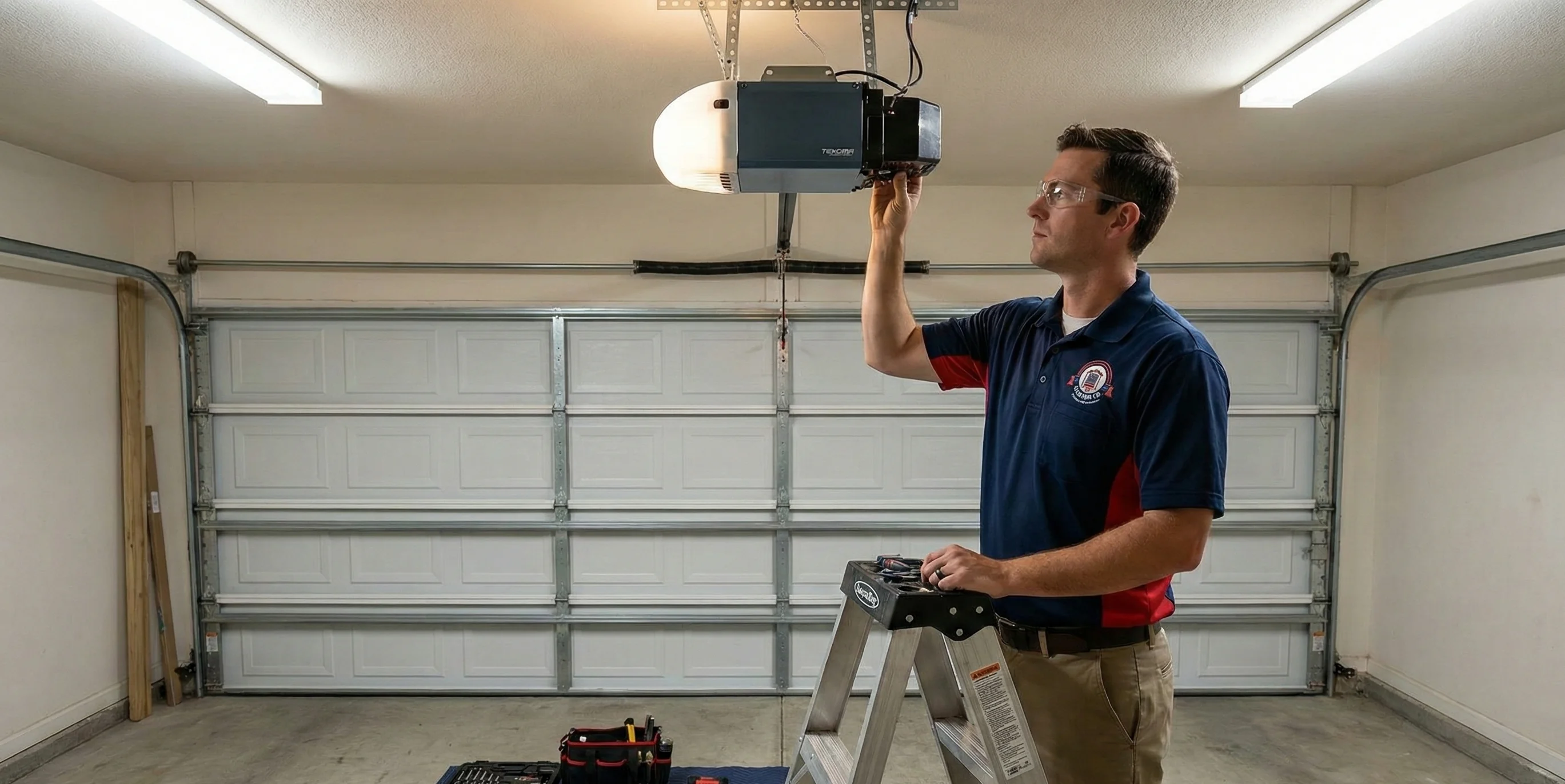
Every member of our team is fully vetted, background-checked, completely insured, and has undergone exhaustive, rigorous technical training. We arrive at your home in fully stocked service vehicles carrying premium, commercial-grade replacement parts, heavy-duty springs, and advanced diagnostic equipment. This means we can resolve almost all Garage Door Repair emergencies on our very first visit.
Commitment to Transparent Pricing
We believe in absolute integrity. We will never use high-pressure sales tactics, and we never hit you with hidden fees or surprise surcharges. Before any technician begins work on your garage door, they will perform a comprehensive, multi-point safety inspection, explain their findings clearly in plain language, and provide you with an accurate, written upfront estimate.
Frequently Asked Questions (FAQs)
How often should I have my garage door professionally serviced if it seems to be working fine?
Even if your garage door operates without any obvious issues, you should schedule a professional maintenance service at least once a year. This comprehensive tune-up allows a trained technician to inspect high-tension components for hidden metal fatigue, re-balance the system, and clear out minor tracking issues before they evolve into an expensive operational failure.
Can I replace just one broken garage door spring, or do I need to replace both at the same time?
You should always replace both garage door springs at the same time, even if only one of them has actually broken. Springs are engineered to endure the exact same number of opening and closing cycles, meaning that when one spring snaps, the remaining spring has experienced identical metal fatigue and will almost always fail shortly thereafter.
Why is my garage door remote control suddenly working from close range but not from further down the driveway?
This frustrating issue is typically caused by low battery voltage in your handheld remote transmitter, or by local radio frequency (RF) interference originating from nearby electronics. You can resolve this by replacing the remote's batteries or checking for nearby LED light bulbs inside the garage door opener itself, as certain cheap LED bulbs emit signals that actively jam opener radio frequencies.
Is it safe to paint my steel garage door to match a new home color palette?
Yes, you can safely paint a steel garage door using high-quality exterior latex paint, but you must avoid applying thick layers that could add significant extra weight to the door panels. Even a slight increase in total panel weight from heavy paint layers can completely alter the delicate balance of the system, requiring a professional to adjust the spring tension to accommodate the change.
Final Thoughts
Your garage door is a vital, hardworking component of your Sherman home. It safeguards your vehicles, protects your family from the elements, and provides seamless security for your property. Waiting for your garage door to completely break down before you give it any attention is a recipe for high stress, expensive emergency repair fees, and dangerous situations.
By performing simple DIY visual checks, keeping the system clean, and investing in annual professional tune-ups, you can extend the operating lifespan of your door by years and ensure that it works safely and reliably every single time you push that button. Preventative care is always cheaper, safer, and far more convenient than an emergency breakdown.
How Can Texoma Garage Door Center Co. Help You?
Don't wait until you are trapped inside your garage on a frantic Monday morning! Take control of your home's security and safety today by scheduling a comprehensive garage door tune-up and maintenance inspection. Whether you need a subtle track alignment, a high-tension spring replacement, or a brand-new, ultra-quiet garage door opener installed, the friendly experts at Texoma Garage Door Center Co. are standing by to help.
Give us a call today or come visit our office to speak with a highly knowledgeable local technician and experience the gold standard of Texoma customer care!
- Business Address: 1733 Texoma Pkwy, Sherman, TX 75090
- Phone Number: (430) 255-5451